
December 2024
Nicolás Galinelli studies endocrine disease in horses at the University of Melbourne
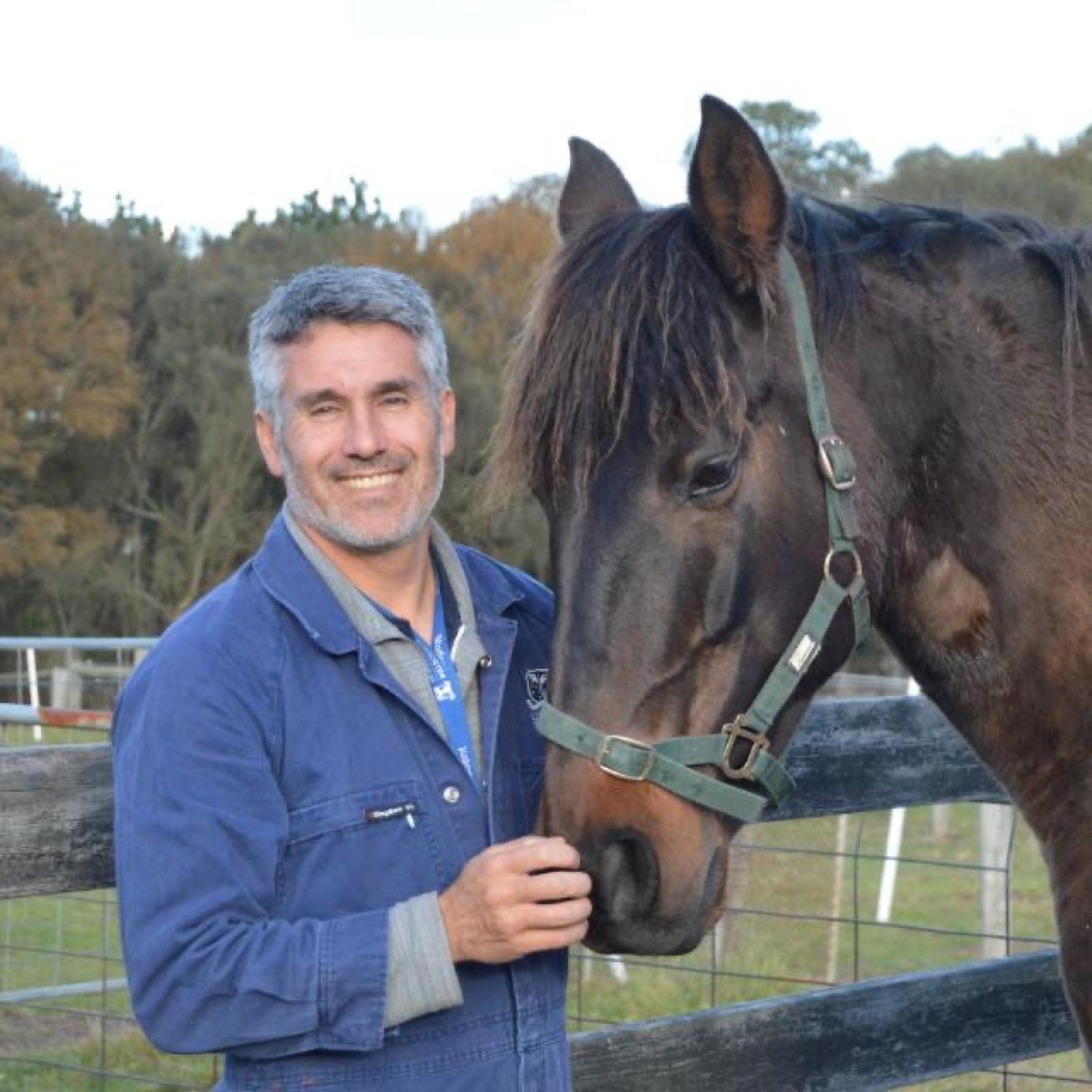
His PhD showed that dopamine shapes horses' insulin response — a lead for preventing laminitis, the main cause of euthanasia in older horses.
Nicolás C. Galinelli, a researcher at the University of Melbourne, studies the pathophysiology of endocrine disease in horses, such as pituitary pars intermedia dysfunction (PPID, formerly known as equine Cushing's disease), focusing on changes in dopamine levels and their influence on the insulin response.
Before coming to Australia he worked as a clinical veterinarian in Colombia, Saudi Arabia and the United Arab Emirates. In 2016 he won a residency in Comparative Veterinary Nutrition with the European College (ECVCN), focused on equine nutrition, at Ghent University (Belgium), which he completed in 2019. In 2020 he moved to Australia for his PhD (2020–2024). He joined the Network in 2022 and served as scientific adviser for Biological and Health Sciences. After his PhD he stayed on as a lecturer at the Melbourne Veterinary School and continues researching equine endocrinology in the Inflammation and Metabolism laboratory of the Faculty of Science.
Dopamine and insulin
PPID affects more than 25% of horses over 15 years old. Its most serious consequence is laminitis — the rotation of the third phalanx inside the hoof — which is the leading cause of euthanasia in these animals, and one of its main causes is hyperinsulinaemia (endocrinopathic laminitis). In horses with PPID, a central finding is the degeneration of dopaminergic neurons in the hypothalamus, a process similar to Parkinson's disease in humans: in both, aggregation of the protein α-synuclein is the main driver of that degeneration.
Because dopamine has been linked to insulin regulation in humans and laboratory animals, the project set out to test whether the same relationship exists in horses. The team successfully reduced dopamine levels pharmacologically for a short period and confirmed their influence on the post-meal insulin response: with normal dopamine, the response to a high-carbohydrate diet is as expected; with low dopamine, the insulin response to the same diet rises considerably.
The findings open the way to further research into this endocrinopathy, with the aim of developing treatments that prevent laminitis and reduce the number of horses that must be euthanised as a result.
Publications
- Galinelli et al. Physiological and metabolic effects of short-term dopamine reduction in healthy horses using a tyrosine hydroxylase inhibitor (alpha-methyl-para-tyrosine). Domestic Animal Endocrinology 90 (2025). doi:10.1016/j.domaniend.2024.106891
- Galinelli et al. Effect of short-term dopamine reduction on insulin sensitivity and post-prandial insulin and glucose responses in Standardbred horses. Domestic Animal Endocrinology 90 (2025). doi:10.1016/j.domaniend.2024.106893